Monday, March 28, 2022

How Something Small Can Make a Big Difference


                                               a pilot ship coming to guide our ship to port

We took a cruise in the Lesser Antilles in the Caribbean this last February to celebrate our forthcoming 50th wedding anniversary.

One thought that I had while traveling is how something small can be so important to something big.

The ship we took was 14 levels high and could have 1250 passengers and 800 staff. This time it was ½ full. It cost 500 million dollars to build and weighs 66,084 tons.[1] Yet the ship could not arrive or leave at any port without a small pilot boat. At every port we arrived, a pilot ship was waiting for us to guide the ship in, often early in the morning, even before dawn.

     The captain of Oceania gave us “guests” or passengers a brief talk one afternoon about the importance of the pilot ship. Chris Cos, a Christian sister at Pilgrim Church, in addition told me that her grandfather was a pilot captain and that he needed to have expert maritime knowledge. Harbor pilots have been used since ancient times to guide vessels into port. Even Marco Polo had help from ancient harbor pilots. Pilot boats are small ships that take maritime pilots to vessels that are arriving at the port. The pilots know about the harbor depths, wind speeds, tide levels, visibility, weather conditions, traffic, berthing and dock infrastructure. The pilot provides the larger vessels safe passage through the port and protects people, property, and land. Becoming a harbor pilot takes years of training and maritime experience. The captain of the vessel must give a harbor pilot complete trust.[2]  

     The pilot ship can provide us several important lessons. On the one hand, we may be reminded of the classic gospel song:

“Jesus, Savior, pilot me Over life’s tempestuous sea; Unknown waves before me roll, Hiding rock and treach’rous shoal; Chart and compass came from Thee: Jesus, Savior, pilot me.”…

“When at last I near the shore, And the fearful breakers roar ‘Twixt me and the peaceful rest, Then, while leaning on Thy breast, May I hear Thee say to me, 'Fear not, I will pilot thee.'”[3]

     We may enter a new area of life, such as the cruise ship entering a port, and think we can maneuver ourselves through all the depths and tides. Yet we forget our Harbor Pilot, God, who can lead the blind by a way they do not know, by currents they have not known God can guide them (paraphrase of Isaiah 42:16). We are “blind” when it comes to the new.

     In addition, God can use the body of believers to guide us. The less impressive members of the body may appear less crucial or important. Paul explains to the Corinthians:As it is, there are many members, yet one body. The eye cannot say to the hand, ‘I have no need of you,’ nor again the head to the feet, ‘I have no need of you.’ On the contrary, the members of the body that seem to be weaker are indispensable, and those members of the body that we think less honorable we clothe with greater honor, and our less respectable members are treated with greater respect; whereas our more respectable members do not need this. But God has so arranged the body, giving the greater honor to the inferior member, that there may be no dissension within the body, but the members may have the same care for one another. If one member suffers, all suffer together with it; if one member is honored, all rejoice together with it” (1 Cor 12:20-26 NRSV).

As well, the cruise ship cannot say to the pilot ship: “I have no need of you.” On the contrary, the members of the sea that seem to be weaker or smaller are indispensable and those members of the sea that we think less honorable we grant with greater honor. Through thousands of years, cruise captains have relied on harbor pilots.

     Similarly, in the church, Christ wants everyone of us to share with others our spiritual gift so the whole body can function well. What would happen if the harbor pilot refused to come out to help the cruise ship? We would have many crashes! The rest of us, moreover, need to trust those with special gifts granted by the Creator of all harbors, tides, and winds.

Aida


[1] https://en.wikipedia.org/wiki/MS_Riviera/

[2] https://www.freightcourse.com/what-are-pilot-boats/

[3] Edward Hopper, Hymns for the living church (Carol Stream, IL: Hope, 1974), 446.


Tuesday, February 22, 2022

A Pineapple Story: Becoming God’s Chosen Pineapple


 Guest blog by Grace Eun-Sun Lee

Grace identifies herself as a Korflican, a Korean born in the Philippines raised in an American-influenced environment. A third culture kid who is also a missionary kid, Grace’s interests lie in worship, the arts, cross-cultural engagement and missions, healing, and Global Christianity. She is currently pursuing the Master of Divinity with a focus on World Missions in Gordon-Conwell Theological Seminary in S. Hamilton, MA. 

“What does a pineapple have to do with where I study or work?” I asked the Lord back in March of 2021. I had entered my sixth semester in seminary, and, by this time, it became clear that I would be here for another year. I asked Him, “God, what is Your vision for this community, in the upcoming year? And what is my role in all of this?” I was expecting words, phrases, something with a WOW factor, that would stir someone to think, “Yes! I want to be part of that!”

God answered my prayer, but not with what I expected. An image of a pineapple came to mind. I thought to myself, “Why a pineapple?” Frankly, while I am a fruit lover, pineapples do not rank high on my list. Growing up in the tropics, I loved mangoes, watermelons, coconuts, apples… but not pineapples. I personally find them a little too sour for my taste. So, I was a bit perplexed why God would call to mind a fruit that I was not particularly fond of.

I recalled humorous memories from the mission field associated with pineapples. For example, one time my mom asked for ten pineapples. Instead, she got ten fine apples (f’s are pronounced like p’s in this country). While I initially chuckled over these memories, the more I prayed into the pineapple imagery, the sadder I became. I realized that this one fruit was connected to deeper memories, memories with people who once were so dear to me but were no longer part of my life. These memories were sour, and in my pineapple episodes I experienced a range of emotions, from anger to sorrow and everything in between as I personally processed and grieved over the loss.

As I cried over these pineapple memories, I remembered what a friend shared with me. One response to the pandemic is a support group called Grief Share that provides help and healing for those who lost a loved one. It is a safe place to share stories and to grieve together. My friend told me that he learned in Grief Share that pineapples are a symbol of welcome. Remembering his words, I felt the Lord clarifying his word to me, “Grace, that’s it. That’s the vision for next year. Welcome.

The Year of Welcome. This is how I experienced God’s heart through a tropical fruit amid the prolonged winter back in March here in New England. I was honestly shocked to realize how many memories could be connected to one fruit. I was also surprised to discover that part of the discerning process for the next year involved having to travel back in time with the Lord, digging up and processing these painful memories and feeling intense emotions I have not felt for a while.

I asked the Lord what His vision for the community was and He gently reminded me, “Grace, your individual healing is also part of my Grand Vision for this community.

Grace, I welcome you in my Great Story of Redemption.

Grace, I invite you to welcome others too as I have welcomed you.”

            The words of Romans 15:7 resounded like a trumpet’s fanfare. The short introductory paragraph of Romans 15 presents the exhortation to follow the example of Christ for the building of the church, the community of God’s people. Paul states, Christ Himself received all the reproaches of humanity (v.3). He is no stranger to disapproval nor estrangement. Yet, in His humanity He served as the perfect mediator to reconcile us to God and restore harmony between people. For those in accord with Christ can be in accord with one another. Consequently, such harmony results in a unified voice that glorifies Christ.

Being a worship leader in a praise team, I find any form of congregational singing gets me excited. One of the grievous moments for me during the pandemic was not being able to sing corporately with others. But, through the pandemic, I came to learn and experience that one voice can be expressed through different ways, whether it is through humming, dancing, or even silence.

Regardless of the form, I am reminded that presenting a unified voice that glorifies Christ is possible when we first accept the divine call to welcome in His example of welcome. Christ’s welcome is rooted in humility, which is beautifully described in the Christ hymn in Philippians 2. The humility that led to Christ’s death is the humility Christ invites us to imitate, an invitation to consider others more significant than oneself (Phil 2:3). The greatest act of hospitality of all history was exemplified on the cruelest form of death. This death was a death to Himself so that we humans may live. This death will one day lead to the highest form of exaltation, where all tongues might confess the Lordship of Christ (v.11).

Considering all that has happened in the recent years with the pandemic and is happening right now locally and globally, I am convinced that God is inviting all of us into His redemptive story with a posture of welcome towards one another. All of us have been impacted by the pandemic where eating together and inviting people into our homes has become difficult for a season. Navigating differing opinions concerning politics and the vaccine has impacted the space between people, physical and emotional. Racial tensions and trauma have perpetuated a toxic environment, stifling conversations and silencing voices. Whatever ethnicity or citizenship we are, all are stumbling over cultural and relational dynamics. While friendships have blossomed during the pandemic, many connections have been severed as well. Many are going through much pain and turmoil. Consequently, we hide. We hide because we do not feel safe. For many reasons, we do not feel safe to be truly ourselves nor to connect with one another. Yet, even in our brokenness, the Lord welcomes us. He invites us to His story of healing and restoration, one page at a time. He invites us to “welcome one another…just as also Christ has welcomed” us “for the glory of God” (Rom. 15:7).

            I believe God is also extending His invitation to us, inviting us to His culture of welcome, assuring us that we can welcome Him even in our weakness and we can welcome one another in our brokenness. How? We welcome the presence of God and others in the place of worship. In worship, all of us are sinners before the holy God. In worship, all of us are saints before the gracious and forgiving God. In worship, we come together unified before the throne and the Lamb, celebrating together in our diversity. In our welcome, we honor. In our welcome, we worship. One step closer to a taste of heaven.

Now back to the pineapple story. I learned that, in America, pineapples have become a symbol of hospitality and friendship.[2] You can easily find them as centerpieces at a dining table or hanging on someone’s front door. While they are often bought and enjoyed for their sweetness, pineapples take three years to mature. Each pineapple you eat takes three years to ripen from green, to sour, and finally to sweet.

The sweetest fruits take the longest time.

Relationships take time.

Creating a culture of hospitality takes time.

Healing will take time.

But it is happening.


So here is my invitation to you. However ripe you are, whether you are a seed or ready to fruit, let us be pineapples together. Let us become the symbol of hospitality and welcome, as God’s chosen pineapples, here in America. As we are invited to partake and partner in God’s Redemptive Story, we too are empowered to invite and to welcome one another to make history together.

It is our desire for our praise be Your welcome
for our songs to signify that we are here for You

We welcome You with our praise

We welcome You Almighty God of love

Be welcomed in this place.[3]


[1] The pineapple is Jane Song’s photograph of Amanda Mittleman’s Pineapple Painting, edited by Grace Eun-Sun Lee, April 2020, from Grace Eun-Sun Lee’s personal collection. This blog is an adaptation of an earlier blog published for Manna Newsletter, Gordon-Conwell Theological Seminary, winter edition, Dec. 7, 2021.

[2] Garrett McCord, The Unique History and Symbol of the Pineapple: A Fruit Representing Friendship, Luxury, and War, The Spruce Eats, Dotdash, Updated on August 15, 2021, https://www.thespruceeats.com/pineapple-symbol-of-friendship-and-luxury-4047011.

[3] Jesse Reeves, Matt Maher, Matt Redman, Tim Wanstall. Here for You. CCLI Song #5925649.  2011 Chrysalis Music Ltd. Sixsteps Music. Thankyou Music. Valley Of Songs Music. worshiptogether.com songs. https://songselect.ccli.com/Songs/5925649/here-for-you.

Monday, January 31, 2022

What Lessons Can We Learn while Being Sick?

After a full year of ministry, I was tired and looking forward to a rest. Instead, I just spent two of my three weeks of vacation in the Dominican Republic in bed trying to recuperate from the influenza. We figured I was contaminated before I left or while traveling through the New York or Santo Domingo airports, three days before my symptoms of a congested head and bodily weaknesses began to appear. After six days I began to improve and, then, to my dismay, I began to get worse. Our friend and doctor in the Dominican Republic had been sick too, but she got better after a week while I got worse. She arrived shortly thereafter at our condo with the famous traditional criolla tea[1] for me to take and other local medicines which quickly began their work, so that I could begin what would become a blog I promised Bill I would do this January.

What topic would be good? In my context, how about, sick people in the New Testament who were not healed instantaneously? (Because Bill and I were surely praying for such an instantaneous healing to glorify God’s name and give me a happy vacation!) I found four New Testament examples: Epaphroditus, Timothy, Trophimus, and Paul who demonstrated that illness happens to all, even to wonderful and faithful Christians.

Epaphroditus (Phil. 2:25-30) was sent to Rome to represent the church of Philippi, bringing a generous donation to help pay for Paul’s expenses since he was under house arrest. He took a lengthy trip by land and sea not only to deliver some money but also to join Paul in his ministry. And what happened? Paul had to take care of Epaphroditus who fell seriously ill! How frustrated Epaphroditus must have felt! Paul came to care deeply for him. Epaphroditus almost died, but with Luke’s care and God’s ultimate intervention, Epaphroditus survived.

What do we learn from this incident? Christians under important pressing altruistic ventures can still get sick! Their time plans can be torn to shreds. If Epaphroditus had died in this venture to help Paul, Paul may have felt guilty that he indirectly caused this amiable Christian worker to die. God had mercy on Epaphroditus, and he avoided death and was able to return home. Even people who get sick while doing ministry, according to Paul, should be welcomed with joy and honored.

In the midst of the many charges of the evangelist pastor at Ephesus, Timothy (1 Tim. 5:23) had frequent stomach ailments from avoiding drinking any wine. Usually in ancient times some wine was mixed into water to purify the water. So, Timothy had “frequent illnesses.” That means that, while he was trying to stop the Ephesians’ push to heterodoxy, he was frequently not feeling well. Possibly Timothy as a model for this imbibing church (e.g., 1 Tim. 3:3, 8) had determined to take the Nazarite vow to avoid all grapes and grape products.[2] Nevertheless, in this case, Paul charges Timothy just to go ahead and drink a bit of wine. Idealism at times has to be tempered with practicality. Well-intentioned goals may have to be adapted because of illness, which sets up its own demands.

Not much is said about Trophimus (2 Tim. 4:20) except that he did not deny the faith like Demas (2 Tim. 4:10) or work actively against the Christian faith like Alexander (2 Tim. 4:14-15). Paul may have been on his way to Rome when he left Trophimus ill at the port city Miletus near Ephesus. Maybe Trophimus planned to accompany Paul all the way to Rome, but sickness kept him from doing so. Did Paul mention him to Timothy in this letter so that Timothy could check up on him? Paul uses a participle to describe Trophimus: “being sick.” However, Paul does not expect Timothy to wait around until Trophimus is better. In Rome, where Paul is, Luke is there with him. This time Paul is under arrest probably at a Roman military camp. Paul only expects Mark, with his many Roman connections, and Timothy, his long-term ministry partner, to be nearby (2 Tim. 4:9-11).[3] Because of Trophimus’ illness, Trophimus could not become one of Paul’s close Roman companions, but Trophimus for the time being avoided persecution from the Roman authorities. Sometimes an illness keeps us from our goals and impedes our time schedules, but we will continue in our plans when we feel better.

Paul himself suffered from some intermittent illness that affected his eyes (2 Cor. 12:7-10; Gal. 4:13-16). Some medical staff consider that the symptoms might align with ophthalmia, such as Retter’s condition, or intermittent glaucoma, which can be painful.[4] The Galatians treated Paul the way Paul wanted the Philippians to treat Epaphroditus. They welcomed him and eagerly listened to his message. They did not scorn or despise him because he was ill. Because this illness impeded his ministry, Paul appealed to the Lord to have it completely healed. But, to the apostle, who had been spiritually brought to heaven itself (2 Cor. 12:3-4), God responded “no” because he wanted Paul to remember that, in the midst of all the traveling difficulties, spiritual and physical hardships, and persecution Paul underwent for Christ’s sake, Paul remained strong and whole because of the indwelling Christ (2 Cor. 12:9-10).

So, what did I learn from this biblical study to enlighten my situation?

1.   Illness can occur anytime in our earthly fallen world. It is rarely convenient, never welcomed, and it almost always impairs our time schedules. However, all efforts should be made for its eradication, even if an illness does lead to death.[5]

2.   People should not be judged negatively if they become ill. Instead, they should take care of themselves, be taken care of, ask for God’s intervention, and heed good advice. Jesus taught that every sick person should be treated as if she or he were Jesus himself and “looked upon” and “taken care of” (Matt. 25:36, 39-40, 43-45). And they should be honored even though they become ill.

3.   Ministry can be done in the midst of illness. Epaphroditus made it to Paul. Timothy and Paul kept on serving despite their illnesses. God’s grace is sufficient in all situations (2 Cor. 12:9; Phil. 2:27).

I was disappointed to get influenza on my own long-awaited vacation, but I was thankful to be in the Dominican Republic with Bill who took care of me everyday doing all cooking and cleaning. I was staying in our lovely condominium where we had plenty of space in a warm, sunny environment and where our local friends and the condominium managers showed concern. I was able to rest and eventually get better. I was glad that when I fell ill, I had completed all my recent work and I did not have an urgent ministry endeavor to do in the midst of my illness like my New Testament Christian coworkers did!     

Aida


[1] Bill describes how to make the tea in our novel Cave of Little Faces, House of Prisca and Aquila Series (Eugene, OR: Wipf and Stock, 2318), 83.

[2] See further A. B. Spencer, 1 Timothy, New Covenant Commentary Series (Eugene, OR: Cascade, 2013), 140-41.

[3] See further A. B. Spencer, 2 Timothy and Titus, New Covenant Commentary Series (Eugene, OR: Cascade, 2014), 146-47.

[4] A. B. Spencer, 2 Corinthians, People’s Bible Commentary (Abingdon, UK: Bible Reading Fellowship, 2001), 209.

[5] John 11:4; James 5:14-18. See also A. B. Spencer and W. D. Spencer, Joy through the Night: Biblical Resources on Suffering (Eugene, OR: Wipf and Stock, 2007 [1994]), chs. 1-2.


Wednesday, December 22, 2021

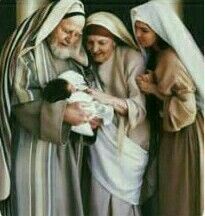
Reaching for Eternity: Luke Reports Mary’s Visitation with Simeon and Anna (Luke 2:21-38) (a dramatic monologue)


I, Luke, when I came to realize that Jesus was indeed God’s Savior for the world, I was moved to gather up the various accounts and reports and documents that were circulating among us to set down an orderly account of everything that happened just 31 years ago. Before too much time elapses, it was natural that I should journey to Ephesus, where John is now overseeing some fledgling churches in that area roundabout, and interview Jesus’s mother herself. 

Mary, of course, as all of you know, is a strong and lovely woman in her early 80s, and she took me out to sit with her in that charming little garden she’s cultivated that no doubt some of you have visited. And, since I know you’re going to ask, yes, the crocuses that you call Rose of Sharon that some of you well-wishers from the plains next to Mt. Carmel sent with that caravan from Joppa did make it here safely and were in full bloom when I visited.    

  Just as you said, they are breathtaking – a beautiful white blossom – snow white as the resplendent robes of our great high priest Jesus, deep blood red in the center as the blood he shed for us, and with a golden pistil in the center to remind us of his victor’s crown.   Beautiful and meaningful and his mother appreciates them – so thank you.

   Anyway, for those of you who haven’t seen her garden, she intersperses it with flowers and vegetables, which is so like her character– valuing both the beautiful and the practical.

As all of you know, Mary is such a scholar – a fine poet in her own right – in fact, in my book I’ve recorded a beautiful ode she composed at her cousin Elizabeth’s house when she was still very young and still carrying Jesus – it’s a lovely composition of words and music – though I’ve only put in the words.  You can all find it early on in my book, when you get around to hearing it in church or reading it yourself.

What you may not know, however, is beyond that gracious demeanor Mary is a profound thinker too. Her memory is like a vast library with corridors of archival recollections – each one tabulated and set in place. From this vast storage, she can summon and retrieve conversations and occurrences in startling detail, for these are her treasures, carefully collected and stored within her.

It is only to be expected, then, that she is the repository of various curious reports.  These she has collected and preserved from the beginning, she being the thoughtful family historian, while the always practical Joseph was the family’s protector and preserver.

And it was from Mary herself that I heard the story I came to tell you of two singular mature people, boon companions of faith, whose remarkable dedication God rewarded in such an astounding fashion.

As a doctor, of course, I am keenly interested in people’s wellbeing.  All of my professional years I have spent trying to find cures for my patients’ ailments, trying to add on a few more years to their life spans, in short, trying to keep them all alive.

Imagine my shock, then, to learn from Mary’s own lips, about two individuals, that, for a certain space and time, were immortal!  They were literally kept from death by the Sovereign God, so that they could see how God was going to save their nation!

Well, I myself have treated many of the aged and seen some sturdy and vigorous constitutions, but never one like the famous Moses, whose eye had not dimmed and whose step had not slackened. And, yet, Mary herself had met such people in her own time and their story was intrinsically tied up with that of the wondrous child that she bore.

She came upon them – but, really, they encountered her – when our Lord was still an infant, only 8 days old!

         By now all of you have heard of that famous night of uncertainty and grace, with its desperate search for shelter and its disappointing end in a cave – a night which suddenly turned resplendent when the heavens opened and angels heralded Christ’s birth, and want was met as the shepherds, who saw the glory brought milk and food to comfort the baby, as any practical, thoughtful, working people will do.

       Well, seven days had gone by while Mary and Joseph slowly traveled the six miles up the caravan route that links Bethlehem to Jerusalem, the weary mother drooping over her tiny precious little bundle, keeping it safe. In the capital they found plenty of accommodations and so they could rest before bringing their tiny son to be circumcised according to the established custom of the Jewish ritual law.

And that’s when the wondrous infant met the wondrous ancients.

Simeon was a senior citizen who lived in the city, not far from the temple.  All his life he had been known as a man who was righteous and devout. But, it was more than that – he was a man who had the Holy Spirit of God upon him, and – believe it or not – the Spirit of God had revealed to him that he would not see death, before he saw the Lord Christ.

It was in the Spirit that he went into the Temple, just as Jesus’s parents were bringing the child into that first large court – the one they call the women’s court, where the women are allowed to enter – right inside the Beautiful Gate. That’s where the people assemble to worship, you know, where the Levite choir performs on the steps there before the Nicanor Gate that shuts off the inner courtyard where only the priests are allowed to enter.  Well, that’s where they do the circumcision.

All of the Jews, including those of the Way who lead us, still are circumcised at birth, though many of us Gentiles who joined after that wonderful and blessed counsel in Jerusalem that freed us from the ritual law, don’t have to go through the rite of circumcision as adults – whew!  We do, however, practice it with our infants, it being a lot easier for them.

Well, anyway, that’s where Mary and Joseph were bringing Jesus, when suddenly Simeon comes rushing in and looking all around among the people, when the Holy Spirit says so clearly to him: “This is the One!”

This is the One!”

Simeon comes right over and everyone simply steps aside, knowing who he was and his great godliness and Mary, who was so protective of her divine little charge, told me she suddenly felt the same Spirit telling her it was all right to let this elderly stranger take her precious child in his arms – so that’s what she did. He cuddled the child and gazed at him with such love and began praising God. “Now you can end your servant’s life, O Sovereign One,” he cried out, “because I have seen with my own eyes your salvation.” And, as his eyes swept over all the multitude that crowds in there daily, all those that were standing gaping at this strange occurrence, Simeon added, “a salvation, which you prepared right before the faces of all people – a light of revelation to the Gentiles!”   (And here – thank God – he was referring to God’s blessing to me and to many of you, since we’re Gentiles not Jews, being grafted onto Israel, like my dear brother and fellow missionary Paul likes to put it.)

And, of course, Simeon also added for the Jews, that this infant Savior was also for “the glory of our people Israel.”

“Well,” Mary confided to me, “you can imagine how Joseph and I marveled at all he was saying.  Here was just one more proof in a surprising series of events that this indeed was God’s Son.

“You see,” she explained, “after my initial visitation by the angel who told me I was going to bear God’s child and that vision that Joseph had in a dream, there was nothing but life as usual. 

 “As the months rolled on, they seemed to get lost first in all the village gossip about me, and then that awful trip to Bethlehem for the taxation when I was well over nine months pregnant and ready to deliver at any moment – joggling along on that donkey and my back killing me and the baby dropping and me wondering, Doctor Luke, if at any second my water was going to break and I might have him right there by the side of the road.

  “And then we had all that trouble trying to find a place to stay and ending up in a stable. 

   “And that very night the baby came and nobody but the innkeeper’s wife and Joseph to help out – and us so far away from home and me from my mother.

  “And then suddenly there were these young shepherds peeking in, and nervously fidgeting with their caps, and telling us the angels had come and told them about us – but we ourselves didn’t see the angels or hear them – they told us that visitation had happened out in the fields.

“So, then, two days later, after Joseph seemed to wait forever in line in order to pay the taxes, we had to pack up what we had and make our way to Jerusalem for the baby, and I was so tired and the baby was so tiny and I was so frustrated, thinking, what kind of reception was this that God’s Great Revelation – the Savior of all humanity – had received, being ushered into an animal cave, then a dusty caravan route, and another cheap inn in the poorer quarters in the backside of the capital, because that’s all we could afford, us being so young and just starting out.

“And that’s why what happened at the Temple was so wondrous and affirming to me, because the renowned Simeon turned specifically to us. And then he raised his hand and blessed us and then he spoke to me specifically in a voice so kind, but his words – words of prophecy – right from God, the baby’s true Father through the power of the same Holy Spirit that had brought Simeon into the temple that day – well, those words pierced into my soul.  He said to me: ‘Listen, this one is destined to cause the falling and the rising of many in Israel and to be a sign of opposition – and your own soul will be passed through by a sword – so that many hearts’ thoughts will be revealed.’

        And, as he gave me back the infant, I saw the woman. She was standing just behind him – his counterpart: the Prophetess.

Her name was Anna.  And, if Simeon was old, she was even older!”

 “How old?” I asked, fascinated.

Mary laughed.  “Well,” she said, “she was far older than I am now. Let me put it this way: She was past the age of nudging you in the side and cackling, ‘Bet you can’t guess how old I am!’ She’d been a widow for 84 years.  And before that I learned she’d been married for seven years. And, if she’d been married around fifteen or sixteen, as I had been, then she must have been around 106 years old!   And even if she’d been married at twelve, which is about the earliest we Jews will allow, she’d still have been about 103.

 “She glowed like the very elderly do – that luminescence where the spirit is glowing through the frail body as if it meant to depart at any moment’s notice. But what I found so remarkable about this woman was she was so clear and focused.  She’d taken her role as an anointed prophetess of God very seriously. She was out of the tribe of Asher, and like her great Matriarch, Leah, first wife of Jacob, Anna was persistent and resolute.   But, like her namesake, Hannah, the mother of Samuel, what she was resolute about was prayer. In fact, I learned that she spent so much time in prayer, worship, fasting, and more prayer day and night, that after a while she moved into one of those little rooms that are built on the raised base of the temple, whose backs form the outer wall and serve as little houses, you know, the ones with passages running out of one into another with easy access into them from the temple gate?

“Well, this great woman of prayer, so faithful and mighty that they installed her in the Temple itself to keep fervent prayer going up before the throne of God, she began praising God and openly speaking about my child and telling everyone who gathered around her that he was the Redeemer for whom they had been waiting.

“And that was the moment I realized the words of Simeon were already coming true, because of the reactions I was noticing. The great bearded Temple leaders, the Sadducees, shook their heads and turned away in disgust, because they no longer looked for anything. The prosperous merchants, some Pharisees who were walking through, paused and gazed curiously at our baby, but then they looked at us and our poor clothing and dropped their eyes and moved on.  They were looking for a political deliverer – and apparently we did not strike them as the kind of people whose son could raise a delivering army.

“But the truly faithful, those like Simeon and Anna herself who were waiting expectantly to welcome the Redeemer of Jerusalem – and, indeed of all the world, they gathered around and praised God with Anna.

“Today, in all the things that have happened since then, I feel myself most akin to these two wonderful people – and not just because I am nearing them in age! But, being now in my 80s, I draw strength from their example - so ancient, so grand, so strong, so faithful, so certain – twin fortresses in whose faith and certitude a generation of true believers took refuge until my Son, our Savior, stepped forth in God’s time and brought the end to that age of waiting.

 “Still, sometimes in the night, I remember so vividly the words of Simeon and the deeds of Anna.  I see them both raising their hands in praise to God, testifying that the great God had come among us in the tiny Redeemer I held in my arms.

“I see their faces – so beautiful – shining in the whiteness of their hair and the luminescence of their spirits, angel-like, as if they were already in praise with all the hosts of heaven before the throne of God. And I see the people gathered around them, drawing strength from their faith, and looking into their faces to reflect the glory there, and I think – that is how I want to be to those who know me – a person drawn so near to God that God has drawn near to me and draws others even nearer through the purity of my faith.

“I have held eternity in my arms.  I have worked with people who have been accused of turning the world upside down with a message of love and peace and joy sung by the hosts of heaven itself one night long ago in the fields around the stable.  I have been visited by kings and given treasures in honor of my child, but I know I am just a handmaid of the Lord who has been singularly blessed.”

Mary paused in reverie as the aged sometimes do, simply nodding and smiling – not so much to me as to people she’d known long ago.

As I sat silently beside her, I knew the wall between past and present, this world and the next, now and forever was dissolving before her.   She was living in many times now and would soon be ushered by the same Holy Spirit who had once visited her when she was so young into the beloved presence of the Child she once bore and whom she now worshiped, our Lord himself.

I came away changed from the meeting.  It is one thing to hear the great story of our redemption and the coming of the child who achieved it, but it’s another thing entirely to meet the people who were part of it and so resolute– to hear their stories and see their peace and joy which are so absolute.

I took away with me the examples of Anna and Simeon and Mary herself and as I left her in her garden, I thought of another garden even longer ago where all the trouble began and I knew that was lost forever.

But, at the same time, I took heart when I thought of a city yet to come – a new capital where I myself, and you, and many others could be citizens - an eternal city that didn’t need a temple to praise God – because the holy Triune God of light is its temple, its light, its splendor, its glory, magnificent in the eternal day.

And, so as not to disturb her memories, I walked away, and, as I did, I looked up toward heaven and prayed: “Thank you Lord, for letting me live in a time such as this, a time after you’ve come among us to redeem us. And thank you, Lord, for sacred lives like these lived out among us, as examples that we can follow. And thank you that your coming among us is not just a legend in some misty past, but a true event that happened in my lifetime and heralds hope for the future. I’m so blessed that I have a share in this hope here and now and always – in my day, in this time, in this place, in my life, a hope shared now with all those who come after me in the future, and may all that I think and say and do please you.”

And I went home and I finished my book. And the Spirit said to me, “Amen.”     

 And I answered: “Amen!”

Bill


Sources consulted:  Josephus, Jewish War v.5.5.; Interpreter’s Dictionary of the Bible; Alfred Plummer, The Gospel According to S. Luke (I.C.C.); Jamieson, Fausset, and Brown, Commentary on the Whole Bible; David Howard and Gary Burge, Fascinating Bible Facts; The Temple throughout Bible History; Ezekiel 41-42; Harry James Frank, Atlas of the Bible Lands. Image comes from google images 1479b5a51ab13a9ce6cc34a77ce2055c.


Tuesday, November 2, 2021

Why Doesn’t God Stop the Suffering in Haiti?


“I know God knows all, is omnipresent, immanent, does things on his own time, and has a sense of mystery about him. My question is, why doesn’t God take the people of Haiti out of constant poverty and continuous humiliation when he is strong enough, powerful enough, honest enough, loving enough, omnipotent, and sovereign when he is able?


A wise Haitian student raised this central theological question in my Theology Survey I class. It is called among theologians a “theodicy” question. It’s taken from two Greek words: theos for “God” and dikaios for “righteous.” And what it is asking in essence is: “If God is all good and God is all powerful, why is there suffering in the world?” What the above question does is go to the heart of the issue. It centers on the nature of God, whether God is really a completely good, just, and loving God and is not the source of all evil, if so, whether God really is not omnipotent, but doing the best God can under the circumstances.

Neither of these solutions is orthodox historical Christianity. We have to find a deeper truth.

My student’s question centers on the relationship of love and justice. God is revealed in 1 John 4:8 as love. But God’s love never sets aside God’s justice. Instead, God’s love fulfills it. Order pervades all of God’s creation: physical and spiritual. Few if any of us humans take the existence of evil as seriously as God does. In order to achieve our salvation, the almighty God had to come to earth through the Person of the Triune Godhead born into humanity as Jesus, “God’s Son,” and die for our sins to defeat evil and reconcile us to God.

In the ramifications of the fall of humanity and the struggle for liberating the world from evil and reconciling humans with God, the Bible gives 4 reasons for suffering: 1) A fallen world, 2) punishment for sin, 3) suffering in a fallen world for advancing the good news of reconciliation in Jesus, 4) mystery.[1]

Humility and gratitude demand that we keep in mind that God did not need us. God was already in an eternal relationship in the Trinity, totally satisfied. But the nature of love is to be shared, so God created humanity to share that love. But for God to do so, to give us a choice to love and obey or not to love and obey, our heavenly Parent did not create us to be automatons: like fembots and malebots programmed to give set responses. Each side of the predestination debate recognizes human free will. God allows people to act upon their own desires. Are our desires to please God, our Creator and rightful Ruler, or to take power ourselves and rule others? God made us both men and women to be stewards of the earth together as recorded in Genesis 1:26, commanded to rule the earth as God’s regents. So, when we rule unjustly, everything and everyone else suffers.

The question about Haiti is right on target. As with so many issues in our fallen world, this one is complex with current events and deeper roots of fear involved. Right now, the current events causing the continuing upheaval in Haiti are the assassination of President Jovenel Moïse and the 7.2 earthquake in Les Cayes (Aug. 14, 2021) and its aftershocks.

Wikipedia has rounded up an impressive number of sources to try to explain what happened. Let me summarize these.

  On July 7, 2021 at 1 a.m. EDT, Haitian President Jovenel Moïse was assassinated at his residence. “A group of 28 foreign mercenaries are alleged to be responsible for the killing. First Lady Martine Moïse was also shot multiple times in the attack, and was airlifted to the United States for emergency treatment… According to the head of the National Police of Colombia, General Jorge Luis Vargas Valencia, the Colombian attackers were recruited by four companies. He stated that monetary motivation seems to be the only reason behind the attackers agreeing to do the job… Moïse called several police officials for help after discovering the attackers, but none of them arrived in time.” The attackers “started shooting in his office and bedroom, and then ransacked the two rooms. Moïse was severely beaten before he was shot multiple times, killing him at the scene. He was shot with 12 bullets in his chest, arms, right leg, and left hip, and had a shattered left eye. The house was riddled with 9mm and 5.56mm bullets. First Lady Martine Moïse was also shot multiple times in the attack, suffering gunshot wounds in her arms and thighs, in addition to severe injuries to her hands and abdomen.”

This was a vicious, deadly assault to annihilate the president and his family. I think it was much more than an assassination. I think it was a warning.

“The Haitian National Police engaged the alleged assassins after they left Moïse's residence. ..Angry civilians joined the search for the assailants, and helped police track down some of them who were hiding in bushes. ..As of 30 July, 44 suspects have been arrested, including 18 Colombians, three Haitian-Americans, 12 Haitian police officers, and six other Haitian civilians…Interim Prime Minister Claude Joseph described the suspects as highly trained and heavily armed foreign mercenaries, a description that was corroborated by the Haitian Ambassador to the United States Bocchit Edmond.”[2]

I decided to check the Wikipedia with people I trust who regularly visit Haiti.

Back in 1992, I had an outstanding Haitian Student in my class and Aida had another in her class. One night, my student told me of his calling from God. He had a burden for a town outside of Port-au-Prince, which had an 30% infant mortality rate. The reason was the people had to use the river for everything, drinking water, washing clothes, their latrine, and watering their animals. I introduced him to Aida, who had been a community organizer for Spanish speaking people before she went to seminary, and she, and these two students, now graduates began to build two boards of directors, one in Haiti and the other in the USA. We made this vision a mission of our church, so it could receive non-profit donations. Over the next years, we found a Christian water ministry with whom we built a well (that plummeted the infant death rate), then a school to educate the newly surviving children, then a church, then a road in and out, and then a clinic. The ministry, named Doorway to Peace Haiti, has sent many teams to help build all these things. Our former Haitian students became a minister and a ruling elder of our church. They remain pillars of our church, intrinsic to its ministry.[3]

 So, I asked them what the assassination was all about. Here was their answer. The president was an honest and just man. His vision was to weed out all corruption in the government. This is why he fired so many administrators and replaced the national chief of police. My former student laments that the president went too swiftly in his reforming campaign. Particularly, he went after the use of the ports for drug trafficking and the involvement of so many high level people in the drug trade.

 Aida’s former student added that he himself grew up as a next-door neighbor of the future First Lady. He said she and her family were wonderful godly neighbors and she is a righteous Christian helping in the reform.

  This assassination fit under the 3rd reason for suffering in the Bible: suffering for advancing God’s reign. One of the main reasons we planted our school is that we want to train future Christian leaders. There are many schools run by Christians with the same aim all over Haiti. But this mission is presently very difficult.

 Haiti is subject to frequent earthquakes. We ourselves were in the Dominican Republic when the last major earthquake hit (Jan. 12, 2010). We were driving on a bridge when it shook, but it did not collapse. Neither was the building where we have a condominium damaged. No one died. But the Haitians suffered more than 250,000 deaths by the same earthquake. Why was that? Because builders there do not build into their structures earthquake protection like they are supposed to do and often paid to do. This is a common corrupt practice. The Doorway to Peace well was damaged and we need a new pump. That’s expected. But our teachers are afraid because no one in Haiti is sure if our school building is safe and classes are being held outside. That is not expected, because we paid for a sound, earthquake proof building to be erected.

 Haiti is in the grip of a power religion that is all about controlling other people. One piece of common knowledge in the Dominican Republic is that some Haitian workers - and the Haitians do nearly all the building there – automatically sabotage your building at the end. So, we tried to stave that off by giving gifts like watches to all the workers and making sure they had health care. My former student even paid for an operation for one worker who had a cancerous growth). And we paid fair wages and made certain our workers were protected so that no one died at our worksite, as happened at the condominium construction next door. At the end, we had little damage, just a token pouring of cement down one of our toilets, but little else. Our building in the Dominican Republic has been sound through all the storms and earthquakes.

 When that previous earthquake hit, the Dominicans organized countless caravans of trucks with all sorts of supplies which they brought over the border and experts and volunteers from the Dominican Republic and all over the world came to help rebuild. We had teams from the USA sleeping in our apartment, some on the floor. This went on and on. Juan Luis Guerra, a devout evangelical Christian who is a world-class musician and composer living in the Dominican Republic and considered a national treasure, at his own expense built a hospital on the border just for those injured in the earlier earthquake. Many individuals, churches, and businesses donated to the rebuilding effort.

 But at that time the Haitian government was corrupt. The then president of Haiti was all over the news because he demanded money from the Red Cross when it offered to build free homes. He claimed he owned the land and wanted to be paid. Then he put a heavy embargo on the egg trade, the main benefit the Dominican farmers had with Haiti. The Dominicans were outraged and disgusted. It was already difficult to take in supplies since the militias controlled the borders and shook down all people trying to help, including the doctors, largely Dominicans, who volunteer at our clinic. The militias create their own tolls for travelers and charge their own excises, even for bringing in medical supplies to help their own people. The army and the police at the time turned an eye away. But the Red Cross event and the egg embargo during the last earthquake were the last political aftershocks the Haitian people were going to tolerate. So outraged at their president’s greediness they forced him out of office, hoping to get a righteous ruler. That’s also why they aided police in catching the assassins this time around.

 Another Haitian graduate of Gordon-Conwell Theological Seminary and one of my Athanasian Scholars and the Founding Director of a Bible Institute[4] here in Boston and in the Dominican Republic and Haiti, just shook his head and explained to me, “The watchword for each president is ‘It is your turn to pluck the chicken. Just don’t take too many feathers." That president took too many feathers.

 But, where sin abounds grace abounds and I know no other people more godly than Haitian Christians. I have had many Haitians excel in my theology classes and become Athanasian Scholars. One of the authors of The Global God, Dr. Dieumeme Noelliste was the Dean of the Caribbean Graduate School of Theology in Kingston, Jamaica.[5] The school flourished under his leadership. He is now a chaired professor at Denver Theological Seminary. The pastor at the church we attend in the Dominican Republic, Father Bruno, has founded ten schools in the north of Haiti.

 Why doesn’t God stop the suffering in Haiti? God is doing it all over Haiti. God works through people, through us. If we want to see change in Haiti and a fair life for all its suffering citizens, we need to support Haitian ministries that are trying to bring about that change.     

Bill


[1] You can read about these in the book Aida and I wrote together: Joy through the Night: Biblical Resources on Suffering (Eugene, OR: Wipf & Stock, 1994).

[3] To learn more about Doorway to Peace, see Doorway to Peace Haiti (dtphaiti.org).

[4] P R E S S BIBLE INSTITUTE - DORCHESTER CENTER, MA - Business Data (dandb.com). He credits the quotation to Jean Jacques Dessalines, the Father of the Haitian nation. It goes: “Pluck the feathers of the chicken but avoid that it doesn’t cry.” It was an acknowledgement of the corruption that was to be done moderately. 

[5] “Transcendent but Not Remote: the Caribbean,” The Global God: Multicultural Evangelical Views of God, edited by Aida Besancon Spencer and William David Spencer (Grand Rapids: Baker, 1998), 104-126.